

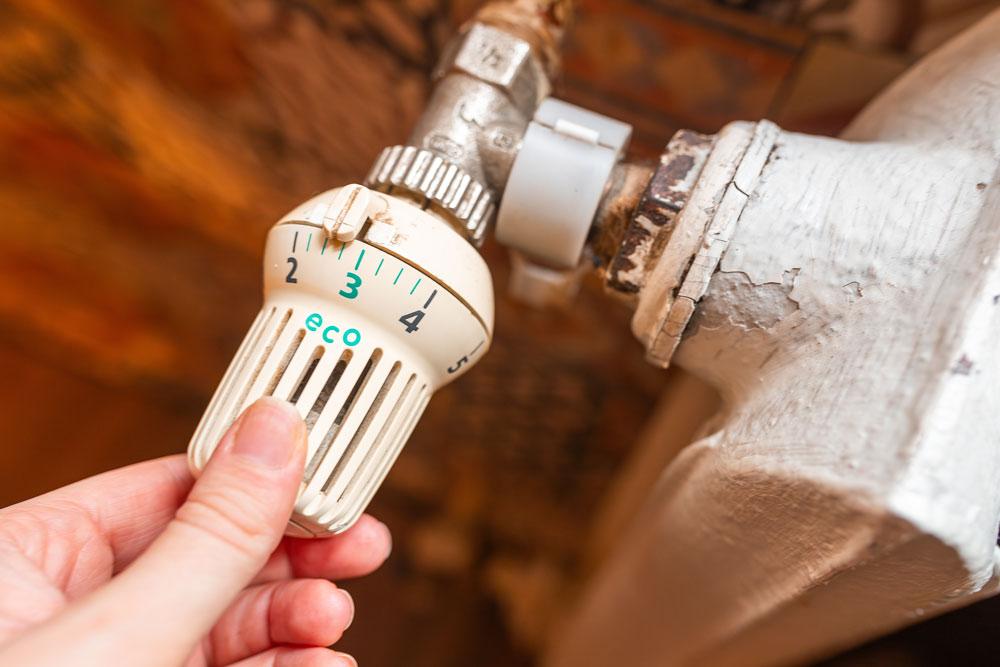
Paul Walker, technical manager at the PCA, explains why local authorities and social landlords should prepare now for the colder months
Ofgem has announced that the energy price cap will increase by 13 per cent from 1 July to 30 September 2026. Although the increase applies during the summer, it places further pressure on household finances and is likely to affect how people prepare for the colder months. For many residents, the main concern will be that energy costs are rising again.
Some people during the colder months will respond by lowering their thermostats, heating fewer rooms or using their heating for shorter periods. Others may delay switching it on for as long as possible, while some residents may be unable to maintain suitable temperatures throughout their homes.
The housing sector cannot control energy price rises, but it can make sure that homes are as prepared as possible for reduced heating use. It is important that checks are made to ensure that ventilation works correctly, heating is distributed effectively, and insulation defects and cold spots are identified. Residents should also understand how the systems installed in their homes are intended to operate. This requires access to surveyors with the knowledge to assess the building fabric, internal moisture, heating and ventilation together.
Why reduced heating can contribute to damp problems
Heating should not be presented as the only way to control dampness or mould. A warm home can still experience problems when ventilation is inadequate, moisture production is high, water ingress occurs, or there is another building defect. However, heating remains an important part of the balance between temperature, moisture, ventilation and the thermal performance of a property.
When heating is reduced, walls, ceilings, windows and other surfaces become colder. This is particularly important at external corners, window reveals, ceiling junctions, thermal bridges and walls behind furniture. These areas can experience high humidity even when conditions in the centre of the room appear reasonable. Government cold-weather guidance recommends heating regularly occupied rooms to at least 18°C, but this may not be affordable for every household.
Simply advising residents to turn up the heating is not an adequate response when cost is the main barrier. Housing providers should instead consider whether the property is performing as effectively as reasonably possible when using less heating. If residents can only afford to heat their homes for limited periods, the building’s heating, insulation and ventilation systems need to make the best possible use of that energy.
Relative humidity and mould
Relative humidity needs to be understood to understand its relationship with mould.
Relative humidity describes the amount of water vapour in the air compared with the maximum amount it can hold at its current temperature. Warm air can hold more water vapour than cold air, so when air cools, its relative humidity rises even if no additional moisture has been introduced.
Air in the centre of a bedroom may therefore have an acceptable temperature and relative humidity. However, conditions can be very different when that air reaches a colder external wall or window reveal. As the air next to the surface cools, the local relative humidity rises. This helps explain why mould often develops in corners, behind wardrobes, around windows and in other cold areas. Heating raises both air and surface temperatures. When heating is reduced, surfaces remain colder for longer and may remain sufficiently humid to support mould growth.
Normal activities such as cooking, bathing, washing clothes, drying laundry and breathing release water vapour into a home. The important question is not whether residents create moisture, which is unavoidable, but whether the building can manage that moisture under the conditions of its occupancy.
There is also a common misconception that visible condensation is required before mould can develop. Condensation is the formation of liquid water when moist air cools against a sufficiently cold surface. However, mould can begin to grow before droplets appear if humidity near the surface remains high for prolonged periods. The absence of visible condensation should not therefore be treated as proof that atmospheric moisture is not contributing to the problem.
Making homes work effectively
Housing providers cannot guarantee that residents will be able to heat their homes to an ideal temperature, but they can ensure that avoidable defects do not increase the risk of doing so. Heating systems should be capable of effectively warming the property, while radiators and other heat emitters should have suitable outputs and be positioned to allow heat to circulate freely. Furniture, curtains and decorative covers may obstruct heat distribution, while poor radiator placement can leave parts of a room consistently colder.
Cold areas may indicate missing insulation, thermal bridging, air leakage or weaknesses in the heating layout. Where households are using less heating, it becomes even more important that the heat they can afford is distributed efficiently. Housing providers should therefore consider the heating system’s performance and layout rather than relying solely on the thermostat setting recorded during an inspection.
Ventilation is equally important. Residents may switch off extractor fans or whole-home ventilation systems because they assume continuous operation is expensive. The actual running cost depends on the type of system, its settings and the household’s electricity tariff, but it may be much lower than expected. Residents should receive clear, property-specific information explaining whether the system should run continuously, how boost controls work, what maintenance is required, how faults should be reported and the likely operating cost. They should also understand the possible consequences of switching it off.
When ventilation is disabled, moisture from cooking, bathing, laundry and normal occupation is more likely to remain indoors. Combined with colder surfaces, reduced moisture removal can significantly increase the risk of mould. Social landlords therefore need to know what type of ventilation is installed in each home and whether it is performing correctly.
A fan may appear to be operating while providing inadequate airflow due to poor installation, blocked ductwork, dirty filters, incorrect settings, or insufficient maintenance. Its performance should be assessed, rather than judged by whether it can be heard running. Residents should not be expected to recognise technical faults, particularly when they have not been given clear information about how the system is intended to operate.
The value of competent investigation
Reduced heating may be an important factor in a mould case, but it should not serve as a convenient explanation that prevents a full investigation. Defective ventilation, poor insulation, thermal bridging, plumbing leaks, penetrating dampness and other building defects may also be involved. A competent surveyor should consider these possibilities and establish how the different factors interact.
Housing providers therefore need surveyors who understand both dampness in buildings and residential ventilation. The PCA’s Certificated Surveyor of Timber and Dampness in Buildings qualification, or CSTDB, assesses knowledge of dampness, timber defects and the legal and health and safety aspects of investigation. The Certificated Specialist in Dwelling Ventilation qualification, or CSDV, focuses on the design, assessment and performance of residential ventilation, including the Building Regulations and Approved Document F.
A surveyor holding both qualifications brings together knowledge of the building fabric, moisture diagnosis and ventilation performance. This combination can be particularly valuable in complex mould cases where several factors may be contributing. Qualifications do not replace experience or a thorough inspection, but they help housing providers identify people who have been trained and examined in the areas required to investigate the problem properly.
Preparing for winter
In conclusion, the increase in the energy price cap should be treated as an early warning. As households become more concerned about energy costs, heating is likely to be used less often and more selectively. This is likely to increase mould complaints.
Local authorities and social landlords should review the performance of ventilation systems, heating output and layout, recurring cold spots and the information provided to residents. Previous cases where mould was cleaned without a detailed investigation should also be reconsidered.
These measures cannot remove the financial pressure created by rising energy costs, but they can ensure that homes are not placed at greater risk because essential systems are defective, misunderstood or operating inefficiently. As energy costs rise, making every part of the home work as effectively as possible will become increasingly important.