

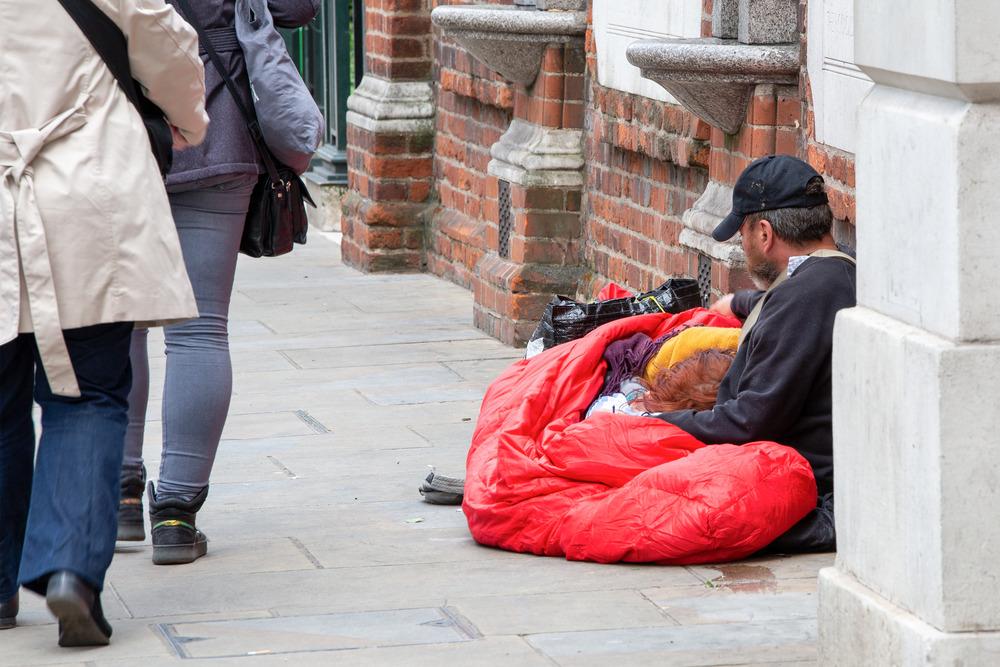
The government said rough sleepers will be offered "greater support" as well as tackling anti-social behaviour through amendments to the Criminal Justice Bill.
The new measures have been introduced in an effort to ensure rough sleepers are directed to the support available to help get them off the streets such as a place to sleep or addiction treatment.
New guidance will make clear that police and local authorities must prioritise directing people who are sleeping rough to support services before they consider using criminal sanctions. This will include directing people where to go to access health services or shelters.
If, despite being directed to support services and given a warning, people continue to cause antisocial behaviour, such as damage or harassment, they will be required to stop and asked to move on with a rough sleeping notice.
Home Secretary James Cleverly said: "This government is committed to ending rough sleeping. To achieve this, we must take a multi-faceted approach that supports vulnerable people off the streets and ensures everyone can feel safe in our neighbourhoods and communities."
The Vagrancy Act will also be scrapped, which wrongly criminalises people for sleeping rough while still criminalising behaviour that is antisocial or intimidating.
The government will also remove references to odours in the bill. This will clarify that previous references to ‘smells’, which had been intended to tackle rubbish dumped or human waste, were never intended to wrongly criminalise anyone for not being able to wash.
The rough sleeping and nuisance begging provisions, together with the repeal of the Vagrancy Act 1824, will come into force three months after the Criminal Justice Bill receives royal assent, allowing for local authorities and police to have appropriate time to work with communities and charities to understand and implement the new laws.
Policing minister Chris Philp said: "Ending rough sleeping is a key priority for the government and is why we have a plan to tackle the root causes of why people end up on the streets, backed by an unprecedented £2.4 billion.
"Nobody should be criminalised for having nowhere to live, but as we have always said, we will not accept behaviour that is antisocial or intimidating to the public, such as rough sleeping in a way that blocks a local business or fire escape."